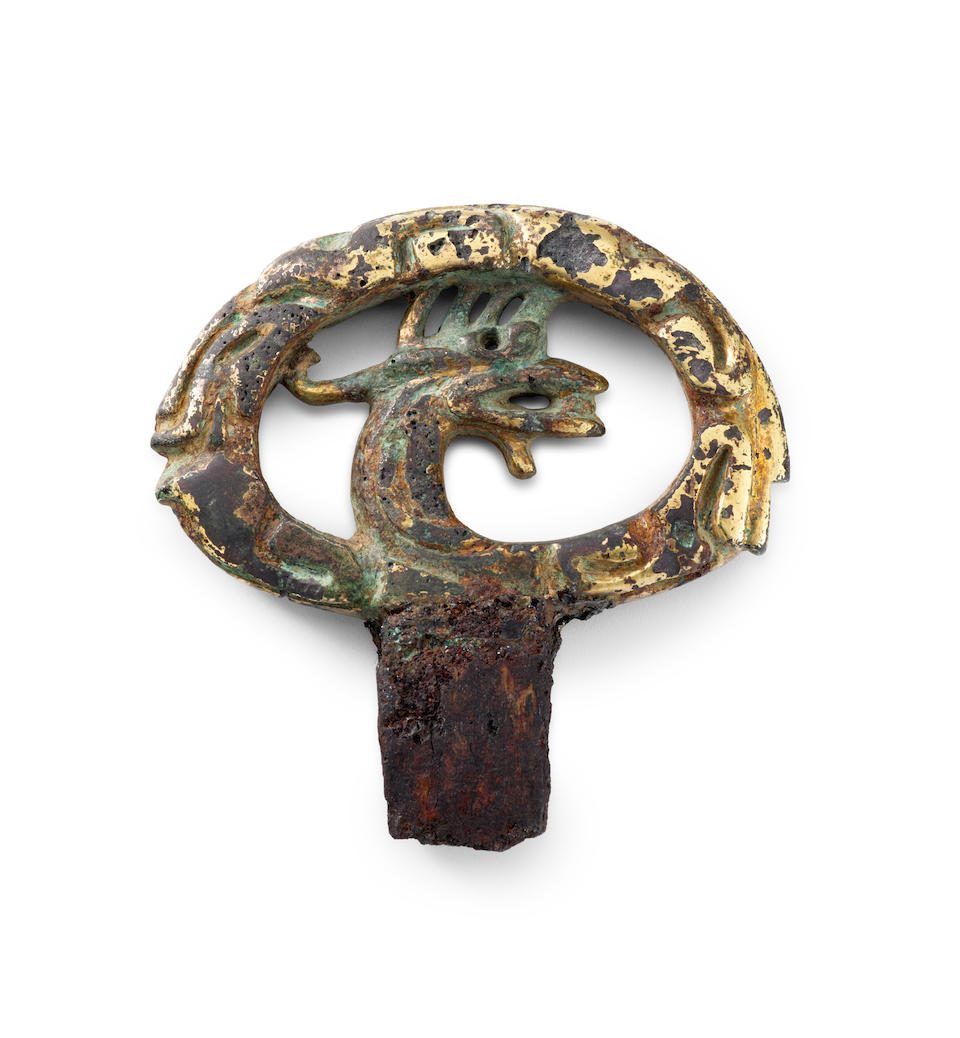
"A gilt bronze kashira (pommel) carved in the round with a dragon's head from a sword excavated from a burial mound. The burial mound where this pommel was excavated was a round tomb that was called Kozuka in the local area for a long time. When the stone chamber was opened during the field work, in addition to the pommel the sword was unearthed. Based on the age of the earthenware and other remnants, it was estimated that the burial mound is from the middle of the 6th century to the 7th century. It is probably thought that the burial person of this burial mound was an influential person.
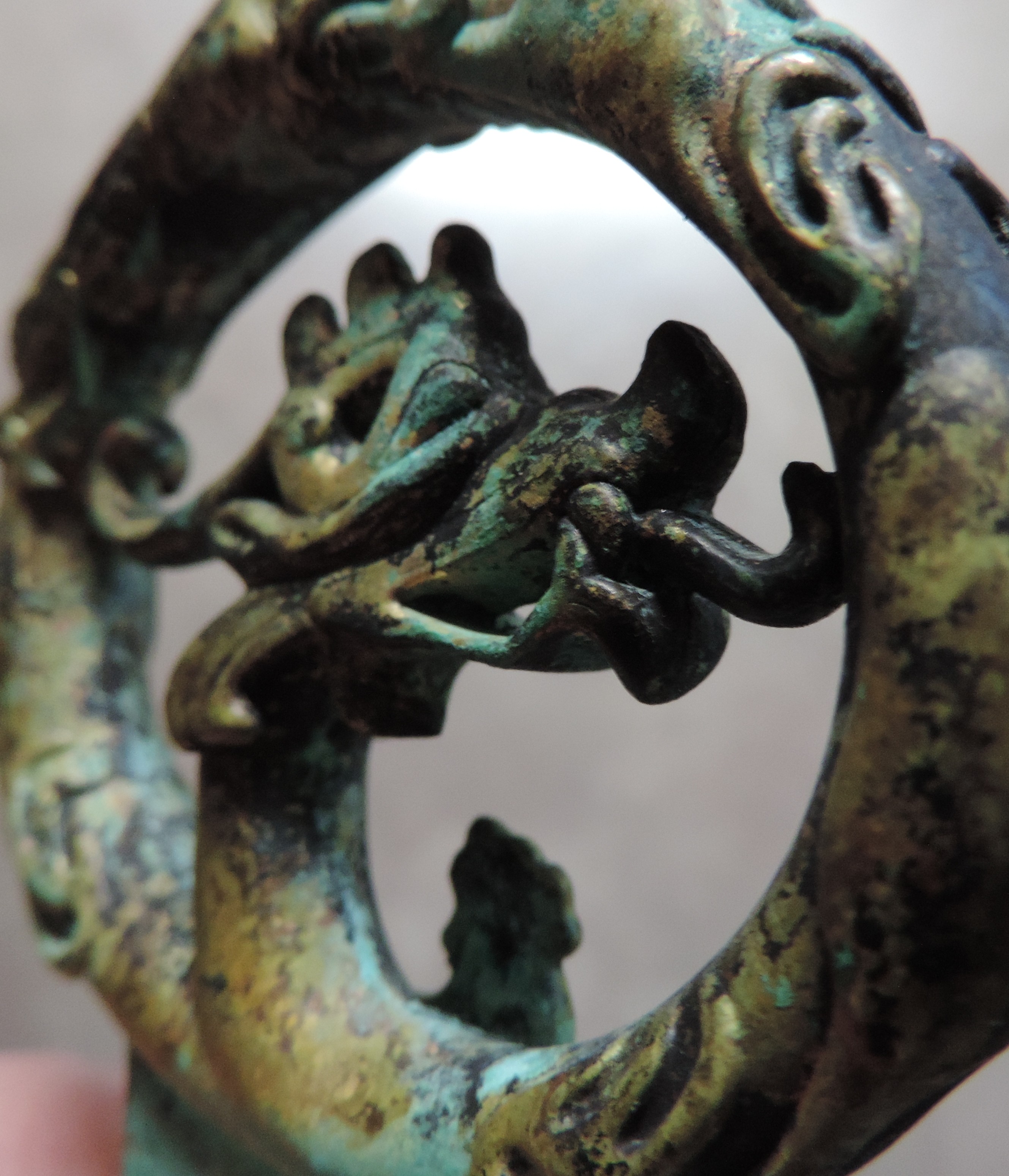
It would be natural to think that the maker was a metalworking engineer who came to the continent under the servitude of the Great King, or a descendant of him who was naturalized in Japan. After shaping the whole thing by casting, the arabesque of the ring, the dragon's comb, the neck, and the mouth are carved using a chisel, and the weight that comes to the palm is thick and comfortable. Originally, it was supposed to be accompanied by an iron sword, a gold and copper sheath, an inverted ovoid sword, and a gold and copper handle, but now only the pommel remains. Perhaps it was originally shining golden and only divine. Now it is pushed up by the patina, and the gold here and there is peeling off, giving a glimpse of the long years that have been in the soil. Still, the remaining gilding shine is still bright, and it is enough to remember the majestic figure and glory of the king of the day with a great sword in his hand. If you observe it closely, you can see that the edge between the ring and the stem-like part with a hole in the shape of an eye nail hole, and reddish-brown lacquer traces were seen on the stem-like part, and the head and handle were glued together using lacquer, and the stem of the iron sword was fixed with an eye nail.
The head of a dragon is reflected on the pommel. The dragon, which has wings, a dragon's neck, a unicorn body, and crane feet, and the characteristics of various beasts that are said to manifest auspicious signs, was a spiritual called a griffin in the Western Regions, that is, a symbol of royal power. The single dragon ring-headed sword, which closely resembles the pommel of the title, has been excavated in other places such as Fujioka, Gunma Prefecture, and considering this, the gold-plated single-headed sword is probably an item given to the king who was appointed by the great king of the Yamato Imperial Court and entrusted with local governance as a symbol of royal delegation. The king, who pulled out the majestic gold and bronze single-headed sword, must have shown off his majesty to his warlords and people during various ceremonies. It is a historical gem that quietly tells the story of the great power of the ancient king, the excellent sense of aesthetics, and the splendor of the skills of the ancient metalworking craftsmen who responded to it.
Kofun period 300-645." (Long)
|