|
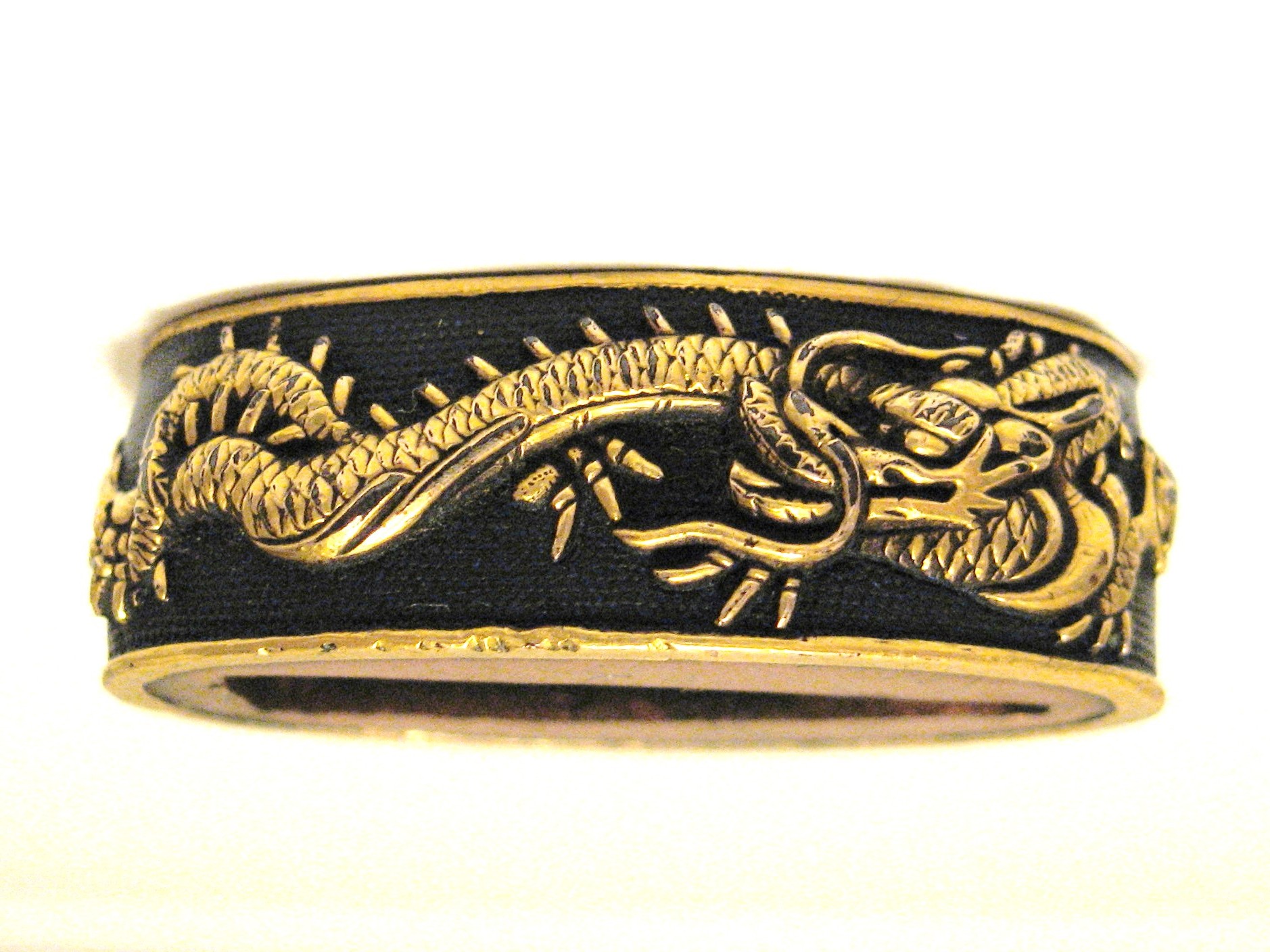
Great care should be taken in the examination of Goto work for the fine points of the quality of carving surface works and finishing of the piece.
Three terms commonly heard in connection with the Goto masters are MUSONO TOGANE, HI-DEN, and DENTO.
MUSONO TOGANE literally means "no thinking or dream thinking carving" but it refers to the style and type of chisel marks to be found on the applied decoration of the early Goto masters in particular. The shape of the point of the chisel created marks that were unique to the work of Yujo. It was a triangular chisel with two of the sides bevelled to a point. The work the chisel made showed great power and force in the strokes. The Musono Togane will not be seen as often even though taught until the seventh generation.
The HIDEN were the secret methods of the masters that they passed on only to the succeeding master. The Goto Hiden secrets were well kept and some are not known to this day, such as the marks they used to identify pieces they had accepted or rejected when making judgement of pieces submitted for their inspection. It is said that the attested pieces are marked in a secret manner in addition to the attestator signature and that those rejected as not the work of the master were also marked so others of the main line would know they had passed through the hands of early masters in the family. These marks are unknown to this day.
The DENTO are the traditional methods of the school which make a piece easily recognizable as Goto work. The visual characteristics of the style and methods of the school as carried on by succeeding generations. The Goto Dento was very strong and even late masters would and could work in the traditional method and style of the school should a commission or other reason call for it. For they were all trained in the Goto tradition, though the later masters were capable of doing work in any other style or fashion of their day. |